Total dynamic head
Total dynamic head is the combined lift and resistance that your borehole pump must overcome at the required flow. It includes lift from the pumping water level, delivery elevation, required outlet pressure and pipe losses. Understanding it helps you check whether a proposed borehole pump can actually fill your tank.
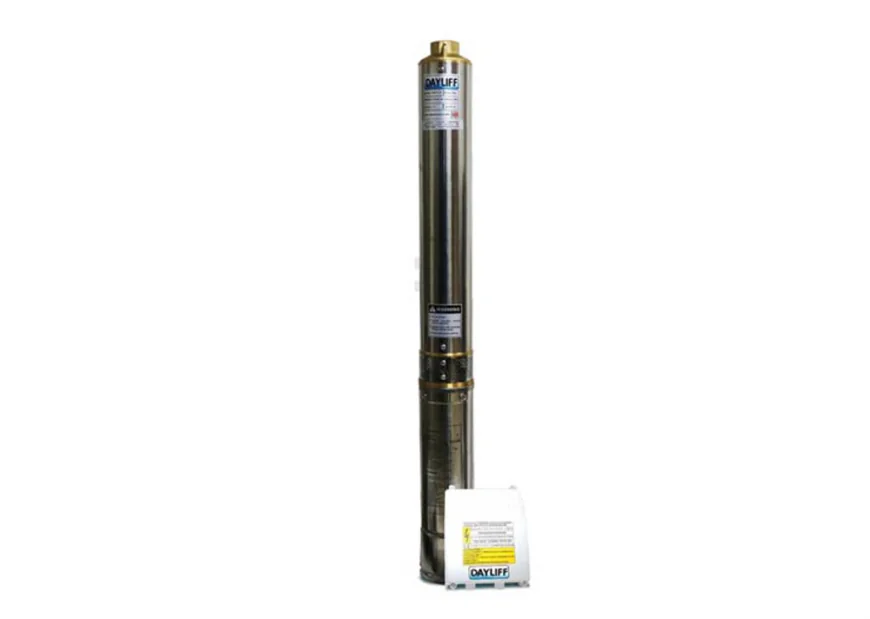
Total dynamic head: start with the operating water level
A useful starting model is vertical lift plus pressure requirement plus friction loss. Vertical lift is measured from the operating water surface to the delivery point. Pressure matters where water must enter a pressurised system. Friction depends on the pipe route, internal diameter, flow and fittings. The design should identify these parts instead of using an unexplained number.
A simple worked example
Suppose the pumping water level is 70 metres below ground and an open tank inlet is 10 metres above ground. The elevation part is 80 metres. If the designer estimates 12 metres of pipe and fitting losses at the target flow, the illustrative duty is 92 metres before any additional pressure requirement. These are example inputs, not measurements for your site.
How pipe friction changes total dynamic head
Long or narrow delivery lines can add substantial resistance. A cheaper pipe option may change the pump duty and running cost. Ask the installer to compare pipe choices at the intended flow. The pressure rating must also suit operating conditions, including relevant transient effects; diameter alone does not determine whether a pipe is suitable.
Read head together with flow
A pump is chosen for a flow at a head. Do not combine a listed maximum head with a listed maximum flow as though both occur together. Request the pump curve and the marked operating point. If the route or tank elevation changes after purchase, have the selection checked again before installation.
Compare quotations using the same total dynamic head
Consider two boreholes with the same drilled depth. One supplies a nearby ground-level tank; the other delivers up a slope through a long pipe to a raised tank. Their required head can differ considerably, even before differences in pumping water level are considered. Send the pumping-test report, tank inlet height and pipe route. Ask the supplier to identify the proposed flow and head on the exact model curve. A maximum-head label on a product is not the flow you will receive at that limit.
What to send for a quotation
- Operating water level
- Tank inlet elevation
- Pipe length, diameter and fittings
- Required flow and pressure
Include your county, nearest town and location pin. Send the borehole report or clear equipment-label photos where available. If you do not have a report or measurement, let us know so the assessment can be included.
Tell us whether you need equipment supply only, installation, a solar conversion or a repair. We will help identify the next step and prepare an itemised quotation for the agreed work.
Prefer a call? +254 743 731151 · support@boreholepumpinstallation.com

View the relevant installation or service → · Compare indicative costs · Shop pumps and accessories
Manufacturer guidance and official information
- Franklin Electric — pump and motor installation resources
- Grundfos — pump selection and sizing
- Water Resources Authority — water-use allocation
Use the instructions for the exact equipment supplied. Technical selection, electrical work and testing need appropriately qualified personnel.
Related services from our sister companies
For drilling enquiries, visit Borehole Drillers Kenya. For related engineering work, visit Hamiki Engineering. Agree their work and quotation separately where it is part of your project.