Solar vs electric pumps
Comparing solar vs electric pumps starts with when you need water and how much storage your site can provide. Solar can reduce dependence on purchased electricity or generator fuel, but the installation and operating plan must suit the site. Electric pumping can be practical where the supply is suitable and water is needed at varied hours.
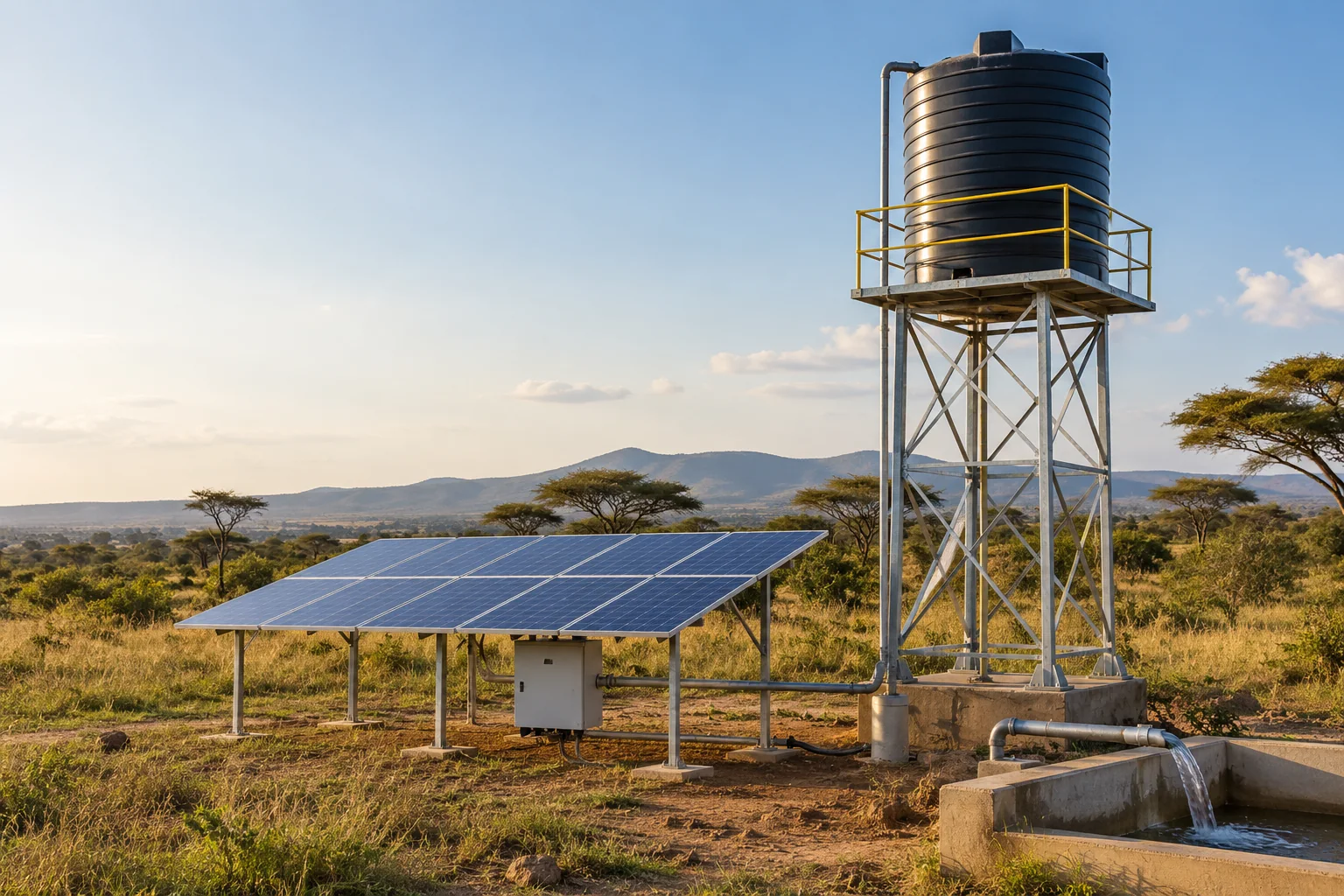
Solar vs electric pumps: match the supply to water use
An electric system can suit demand supported by an available and adequate grid supply. Direct solar pumping aligns production with sunlight and often pairs with water storage. Describe when water must be available and how much can be stored. The right comparison uses your operating pattern rather than a general promise that one source is always better.
Include the upfront and recurring costs
Compare equipment, installation, supply upgrades and storage together. For electric operation, use your actual tariff and expected operating hours when estimating energy costs. For solar, allow for maintenance and future component replacement. Solar generation does not make every operating cost disappear, and an electricity saving estimate should state its assumptions.
Solar vs electric pumps: storage and service planning
Decide how much stored water is needed during a power interruption or weak solar production. Critical facilities may need a backup strategy and a defined operating procedure. Do not assume that a solar pump automatically runs at full flow all day or that a hybrid label guarantees uninterrupted water delivery.
Check whether existing equipment can be retained
If a pump is already installed, review its nameplate, operating duty, controller and electrical supply before choosing conversion equipment. Some systems can reuse components, while others need replacement. Compare the complete retrofit scope with a new system and account for retrieval or recommissioning where required.
Solar vs electric pumps: compare the complete proposals
For a fair comparison, use the same delivery duty and daily volume. Include the electric connection and controls on one side, and panels, mounting, pumping inverter and protection on the solar side. Then consider expected pumping hours, energy cost, maintenance and storage. Do not accept a fixed payback period without the assumptions behind it. If the farm needs water after sunset, establish whether stored water can meet that demand or whether a separately designed backup arrangement is necessary.
What to send for a quotation
- Current electricity and water records
- Daily and peak demand
- Storage autonomy target
- Existing motor and controller details
Include your county, nearest town and location pin. Send the borehole report or clear equipment-label photos where available. If you do not have a report or measurement, let us know so the assessment can be included.
Tell us whether you need equipment supply only, installation, a solar conversion or a repair. We will help identify the next step and prepare an itemised quotation for the agreed work.
Prefer a call? +254 743 731151 · support@boreholepumpinstallation.com

View the relevant installation or service → · Compare indicative costs · Shop pumps and accessories
Manufacturer guidance and official information
- Franklin Electric — pump and motor installation resources
- Grundfos — pump selection and sizing
- Water Resources Authority — water-use allocation
Use the instructions for the exact equipment supplied. Technical selection, electrical work and testing need appropriately qualified personnel.
Related services from our sister companies
For drilling enquiries, visit Borehole Drillers Kenya. For related engineering work, visit Hamiki Engineering. Agree their work and quotation separately where it is part of your project.