Size a borehole pump
To size a borehole pump correctly, start with tested yield, daily water demand and the required delivery head. Drilled depth alone is not enough. This guide explains the information a Kenyan property owner should send before ordering: pumping-test results, litres required, tank elevation, pipe route and available power.
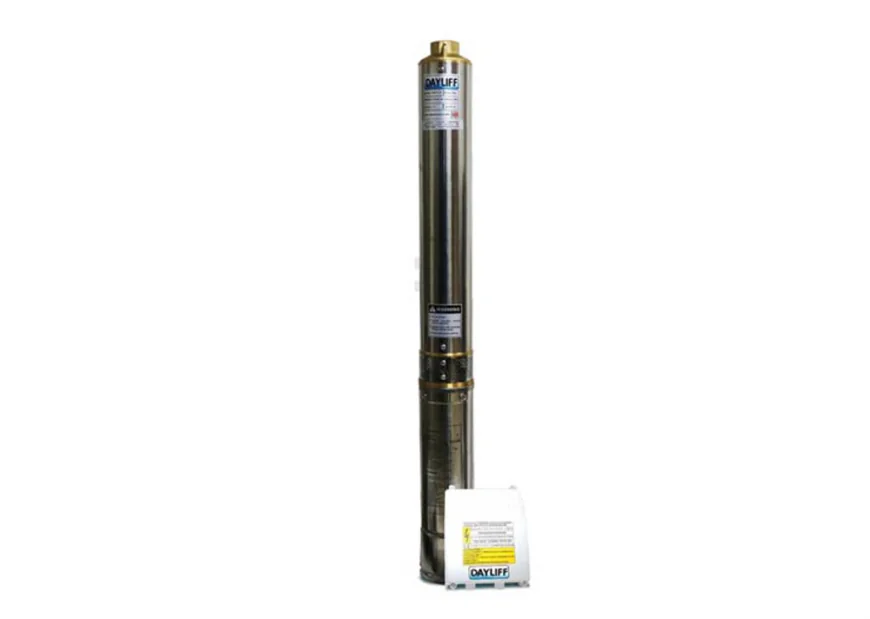
How to size a borehole pump from your daily demand
List the uses supplied by the borehole and estimate the daily volume for each. Separate daily consumption from short periods of high demand. A tank can help separate pumping hours from usage hours. For irrigation, use an irrigation design rather than assuming that household demand calculations can be applied to an entire farm.
Work from the pumping water level
The level while pumping is central to the lifting requirement. Add delivery elevation, required pressure and pipe losses to establish the design head. Do not substitute the bottom of the borehole for the operating water level. The installation setting is a separate decision that must account for submergence, source conditions and manufacturer requirements.
Size a borehole pump for the tank height and pipe losses
A pump cannot create additional groundwater. Review the test-pumping interpretation and the authorised abstraction conditions. An oversized pump can draw the water level down too far or require frequent interruptions. If the source cannot support the desired supply, consider storage and demand management before selecting equipment with a higher output.
Choose from a performance curve
Request the proposed duty point on the manufacturer curve and the assumptions behind it. Check the motor, controller, cable and pipe as parts of the same design. Keep a copy of the selection with the handover documents. The flow and pressure measured after commissioning provide a baseline for later service decisions.
Size a borehole pump from measured records
For an illustrative example, a property needing 10,000 litres delivered in five useful pumping hours would need an average delivery of 2,000 litres per hour over that period. That calculation is only a starting requirement, not a pump recommendation. The source must support the abstraction and the chosen pump must deliver at the actual total head. Solar output also varies with conditions. Share the desired volume and operating hours so they can be checked against the borehole and equipment rather than buying by HP alone.
What to send for a quotation
- Daily demand
- Pumping level and tested yield
- Tank elevation and route length
- Required outlet pressure
Include your county, nearest town and location pin. Send the borehole report or clear equipment-label photos where available. If you do not have a report or measurement, let us know so the assessment can be included.
Tell us whether you need equipment supply only, installation, a solar conversion or a repair. We will help identify the next step and prepare an itemised quotation for the agreed work.
Prefer a call? +254 743 731151 · support@boreholepumpinstallation.com

View the relevant installation or service → · Compare indicative costs · Shop pumps and accessories
Manufacturer guidance and official information
- Franklin Electric — pump and motor installation resources
- Grundfos — pump selection and sizing
- Water Resources Authority — water-use allocation
Use the instructions for the exact equipment supplied. Technical selection, electrical work and testing need appropriately qualified personnel.
Related services from our sister companies
For drilling enquiries, visit Borehole Drillers Kenya. For related engineering work, visit Hamiki Engineering. Agree their work and quotation separately where it is part of your project.