Borehole pipes, cables and headworks
Borehole pipes, cables and headworks connect and support the pumping equipment between the source, power supply and delivery line. We supply and install drop pipes, waterproof cable joints, valves, meters and headworks connections, with quantities measured for the installation.
Approximate cost in Kenya
Borehole pipes, cables and headworks costs
KSh 50,000–250,000 — A planning allowance for rising mains, drop cable, jointing and headworks on a small to medium installation.
KSh 250,000–500,000+ — Deeper settings, larger pipe or cable sizes and more extensive replacement work.
Allow separately: Long surface pipelines, major trenching, difficult retrieval and civil works are separate.
Planning estimates reviewed 10 October 2026, not a fixed quotation or confirmed call-out rate. Equipment, depth of installation, access and location change the total; some projects fall outside these ranges. Confirm VAT, transport and all inclusions in your written quotation.
The parts hidden inside the borehole deserve as much attention as the pump. An undersized cable, unsuitable pipe or poor submerged joint can interrupt the supply and make lifting necessary. A proper materials list helps you avoid buying twice.
When to book borehole pipes, cables and headworks
Choose this service for new borehole equipping, replacement of damaged pipes or cable, and improvements to surface connections. Send the pump details, installed depth, tank route and photographs of the existing headworks. Tell us whether the submerged assembly is already removed.
What borehole pipes, cables and headworks includes
The quotation identifies pipe size and rating, cable size and length, jointing kits, valves and installation work. It separates the rising main inside the borehole from the delivery line to the tank, and states whether lifting, trenching and reinstatement are included.
Choose drop pipes for pressure and suspended load
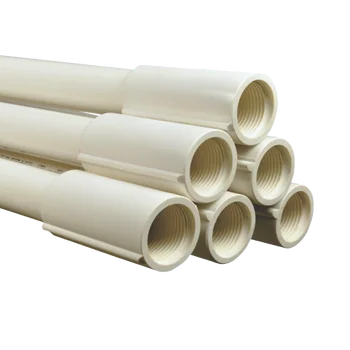
The rising main carries water up the borehole and forms part of the suspended installation. Its material, pressure rating, joints and load capability must suit the pump setting and duty. A pipe of the right diameter can still be unsuitable for the job. Compare the specified drop-pipe system with the cheaper-looking alternative before ordering. Surface HDPE delivery pipe has a different role. List it separately in the bill of quantities.
Our pipe catalogue identifies nominal sizes and the pressure designations supplied on the list. Prices are shown per pipe length, with the actual physical length and coupling details confirmed in the quotation. Ask the proposal to state the total measured quantity and any separately priced fittings or adaptors. For retained pipework, inspection findings should determine what can be reused. The rising main and the surface delivery line may have different requirements. Itemise their materials, quantities and installation work separately. This makes both the purchase and any future maintenance easier to understand.
Buy the right cable size and measured length
Submersible cable runs between the motor and the control arrangement and must suit the wet environment and electrical duty. The conductor size depends on the motor, supply and full route length. Saving on an undersized cable can cause problems that cost much more to correct after lowering. Our cable prices are per metre; ask for the cable size, quantity, routing allowance and jointing materials on the same quotation.
Cable prices in this catalogue are per metre. Agree the measured length, allowance for routing and terminations, joint positions and the exact conductor and insulation specification before ordering. Before retaining an existing cable, have its condition and suitability assessed. Looking at the accessible end alone cannot establish its condition. A quotation should identify terminations and approved jointing materials alongside the main cable quantity. Include these details in the materials schedule so you can budget for necessary electrical materials alongside the equipment price.
Use a proper waterproof cable-jointing kit
A cable joint inside the borehole needs the correct waterproof system for the cable and application. Ordinary insulating tape is not a replacement for a suitable submerged joint. Our shop includes Cellpack jointing-kit options; the installer must confirm the right kit and follow its instructions. Include the kit and electrical testing in the installation price so a small omitted item does not become a hidden weakness in the system.
Do not transfer specifications from a similarly named product without verifying that it is the same kit. Ask the installer to identify the jointing material, preparation method and relevant testing in the scope. Insulating tape may be useful as a general accessory, but it is not a substitute for a properly specified submerged joint system. Good purchasing records identify the kit and show where the joint sits in the installed cable. That record can save time when later electrical testing needs to distinguish a cable fault from a motor or controller issue.
Keep surface connections secure and serviceable
The borehole headworks are where the rising main meets the delivery pipe, valves, meter and supporting arrangement. Plan accessible connections so a technician can inspect the system or lift the pump later. Tell us about leaks, damaged covers or cramped space. Select non-return valves, flange sets and water meters for the pipe, pressure and connections. Nominal diameter alone does not establish suitability.
Our catalogue includes flap non-return valves, water meters and flange sets in the listed sizes. Each needs its pressure, material and connection details confirmed for the actual supply. Matching nominal diameter alone does not prove that flange drilling or pressure classes are compatible. A useful quotation identifies included gaskets, bolts, adaptors and any separately priced civil or fabrication work. Keep a simple layout in the handover file so an operator can identify the normal delivery path and a future technician can understand how the source, meter, valves and downstream system connect.
Will the pump deliver water to your tank?
The pump must lift water from the pumping water level and deliver it through the pipework to the agreed outlet. A raised tank, uphill plot or long delivery line adds to the duty. That is why two boreholes drilled to the same depth can need different pumps. Share the tank inlet height and route from the borehole. The selection should show the required flow at the total pumping head, rather than unrelated maximum-flow and maximum-head figures.
Send a simple site sketch showing the source, tank, approximate route, changes in elevation and any existing pipe sizes. The agreed assessment can refine these measurements. Ask the supplier to mark the proposed operating point on the curve for the exact pump model. A maximum-head figure and a maximum-flow figure are not a promise that both occur together. Clear duty information also helps compare quotations: two differently priced pumps may be designed for different jobs, while two equal-kilowatt pumps may have very different hydraulic performance.
Check that the pump will fit and can be lifted later
Confirm the actual clear inside diameter of the borehole casing before buying the submerged assembly. The pump, motor, cable and joints all need room. Share the completion report and any history of obstructions or difficult lifting. At the surface, keep enough access for installation and future retrieval. A permanent structure, parking obstruction or tightly enclosed pump house can turn a straightforward replacement into a more expensive job.
For existing systems, provide the old pump setting, pipe type, cable details and photographs of the headworks. Tell us about previous retrieval problems before new equipment is booked. The scope should identify what is known, what requires inspection and how an unexpected obstruction would be handled. This helps avoid treating a straightforward supply quotation as a commitment to work that has not been assessed. A good installation remains serviceable after handover, so clearance and access should be considered alongside the immediate need to lower the equipment.
Know whether the price includes the motor
A pump end is the section that moves the water; the motor drives it. Some listings are for the pump end only, while others are complete assemblies. Check the package before comparing prices. The selected motor must match the hydraulic end, power supply and controls, including phase and voltage. For a replacement, send both labels so the supplier can check the retained parts alongside the new component.
If you are replacing only one part of an existing assembly, send clear photographs of both the pump and motor labels. Include the reason for the replacement and any diagnostic findings. Retaining a sound component can be sensible when the match is verified, but installing a new motor against an unresolved hydraulic fault can repeat the original problem. The written quotation should distinguish the motor, pump end, complete assembly and starter so you can see what the price actually buys and which existing parts will remain in service.
Confirm mains electricity, generator or solar power
Tell us whether the property has single-phase or three-phase electricity, a generator, solar or a combination. Include the motor label and the distance from the supply point to the control panel. If the pump trips after a power interruption, mention that history. A suitable motor and correctly planned connection are essential; the quotation should show who supplies and tests the incoming electrical connection as well as the borehole equipment.
Provide photographs of the existing distribution board, motor label and controller where it is safe to obtain them without opening live equipment. Electrical measurements and alterations belong to appropriately qualified personnel. Agree who is responsible for the supply-to-panel connection, isolation, earthing, cable route and testing. A pump quotation that stops at the motor leaves important connections unresolved unless it names who will complete that work. We bring these questions into your quotation so the system proposal accounts for the route from available power to controlled water delivery.
Budget for electrical protection and earthing
The electrical design should include suitable isolation, protective devices and earthing for the motor, controller and power source. With solar, the PV disconnect must suit the actual DC voltage and current. A lightning-arrestor product on its own is not a complete protection system. Ask for the proposed devices and electrical work to be listed, particularly where the installation is exposed or the property has a history of power-related faults.
Have appropriately qualified personnel define isolation, protective devices, earthing and the verification work. The quotation should identify what is included and what belongs to an existing upstream supply installation. For exposed or remote sites, discuss access for inspection and the practical route for reporting a fault. Retain the protection schedule with the motor and controller records. This is valuable when equipment is changed later: a replacement can alter the electrical requirements, so the old protection arrangement should be reviewed instead of simply reused because the previous pump used the same nominal kilowatt rating.
Stop tank overflow and check low-water control
A float switch can signal tank level, while compatible borehole probes can help the controller respond to source-water conditions. They are different devices with different jobs. Tell us whether the problem is overflow, early stopping or failure to restart. The installer must check the controller and sensing system together. Our shop includes float switches, probe sensors and electrode accessories; the selected type and cable length follow the control design.
The quotation should state the device, cable length, mounting and any additional interface components. It should also explain the intended operating response and how the installer will check it. For an existing fault, tell us whether the pump stops too early, runs after the tank is full or fails to restart when water is required. Those patterns help frame the investigation, but they do not prove that the sensor itself has failed. Keeping sensor and controller records together makes future service more direct and reduces the temptation to bypass a useful control because its behaviour has not been understood.
Plan the pump lifting before the team arrives
Lifting a borehole pump requires the installed depth, pipe type, cable arrangement and space for the work. Share previous installation records and photographs of the headworks. A normally retrievable assembly and a stuck pump are different jobs. If lifting is needed, agree the method, labour and equipment allowance, and how additional work will be authorised if damaged pipes or an obstruction are found.
The scope should explain the planned retrieval, inspection, reinstatement and testing, and identify how unexpected findings will be agreed. Once equipment is accessible, inspect the retained components against the requirements of the replacement assembly. A new pump does not automatically justify reusing every old part, and retrieval does not automatically mean that everything must be replaced. Ask for the removed and installed model information, the condition findings and any returned components to be recorded. A clear record supports both your purchasing decision and any subsequent discussion with a warranty provider or service technician.
Reuse sound parts where they suit the new system
Replacing a pump does not mean every pipe, cable and control must be new. Keeping suitable components can reduce the bill. They still need condition and compatibility checks, especially after a motor failure or during solar conversion. Ask the quotation to state which items will be kept, replaced or checked after lifting. You can then see where the saving comes from and avoid carrying an unresolved fault into the new installation.
Ask the proposal to label each part as retained, replaced, subject to inspection or outside scope. Where inspection is needed before a final decision, agree that stage and the process for approving additional work. This is especially useful for electric-to-solar conversions and pump replacements, where the visible new equipment can distract from hidden interfaces. Keep the reasons for retention with the handover documents. Future technicians can then distinguish a deliberate assessed decision from an undocumented assumption and understand which parts of the system were actually renewed during the project.
Test borehole water before choosing treatment
Clear water is not proof that borehole water is suitable for drinking. Share the laboratory report and explain whether the supply is for domestic use, livestock, irrigation or a process. Water quality can also affect equipment materials and treatment selection. Do not assume all boreholes in a county have the same chemistry. Treatment equipment needs to match the actual analysis and required flow; a small household reverse-osmosis unit is not a universal whole-property solution.
For a new project, include available laboratory results with the borehole records. For an existing system, tell us about changes in colour, sediment, odour or operating behaviour, while recognising that these observations do not replace analysis. If you need treatment, choose its specification using the feed-water condition and required output. A seven-stage reverse-osmosis listing is not a universal treatment design for every borehole. Agree any pretreatment, maintenance consumables, reject-water handling and quality verification separately. Document these decisions clearly. A pump installation alone does not establish a drinking-water guarantee.
Know who is doing each part of the job
A borehole project can involve the driller, pump installer, electrician, plumber and tank or civil-work contractor. Identify who provides the incoming power, trench, tank support and final connections. If you supply some equipment yourself, have the installer check it early. Clear responsibilities prevent delays on installation day and make the quotation easier to compare with the actual work completed.
If another specialist handles part of the project, share the agreed design inputs and connection requirements before ordering. The same principle applies when the owner buys equipment separately: the installer needs the actual model information and an opportunity to check the proposed match. Agree changes in quantity, route or duty in writing before changing the work. Different companies can handle parts of a coordinated scope. Each company still needs clear connection requirements and responsibilities. We help turn those connection requirements into a clear project brief for quotations and review.
Compare borehole pipes, cables and headworks quotations on the same scope
Ask for an itemised quotation showing the exact pump, motor, control panel, pipe and cable quantities, fittings, labour and commissioning. With solar, include panels, inverter, mounting and protection. Then check transport, VAT, trenching and electrical connections. A lower total can simply mean that important items are missing. Comparing the same requirements makes it easier to choose value for money and agree the full bill before work starts.
Confirm tax treatment, delivery or collection, payment stages, availability and the written warranty route before accepting the order. Compare proposals using the same duty and included work. One quotation may cover a pump end only while another includes a motor, controls, cable and commissioning. Another may exclude civil work or the supply-to-panel connection. Request those differences in plain language. Your approved scope should name the supplied equipment, the installer’s work and your own responsibilities. It should also explain how you approve changes if the assessment reveals additional work.
What changes the cost of borehole pipes, cables and headworks?
The main price drivers are the selected pump and motor, installed depth, pipe and cable quantities, power arrangement and access for the work. A longer cable run or a higher tank can change both the materials and equipment selection. For solar, panel capacity, mounting and the pumping inverter also affect the total. Tell us whether the price you need is supply only, installation labour or a complete working system.
Use the approximate range near the start of this page as an initial budget. The written quotation confirms your actual quantities and work. Compare cable prices per metre, drop pipe prices per supplied length, and accessory prices per piece or set, using the units stated in the shop. Confirm the physical pipe length before calculating the number required. Ask whether the price includes VAT, transport, lifting equipment, trenching and commissioning. Keep a separate allowance for tanks, towers, treatment or a new power connection unless the quotation lists them. Larger or difficult installations may cost more than the indicative range; the equipment and measured work should explain why.
Plan borehole pipes, cables and headworks for your county and site
A location pin, contact person and access details help us prepare a realistic delivery or installation quotation. Tell us about rough access roads, narrow gates, restricted working hours and space to unload pipes or lifting equipment. For an occupied apartment block or school, agree the water-interruption window. These practical details affect travel, equipment and time on site, so share them before booking the visit.
Our contact base is Kamulu, Nairobi, and enquiries are welcome from all forty-seven Kenyan counties. County planning pages help collect the right information; they do not represent a separate branch or a guaranteed attendance time. Confirm travel, delivery and scheduling for your actual project before booking. The aim is to arrive with an agreed scope and the correct equipment information, while acknowledging any assessment still needed on site. Clear access details also help distinguish a price for collection from a delivered price and from a complete installation commitment.
Borehole pipes, cables and headworks: check delivery before sign-off
Commissioning checks the installed system against the agreed job. Ask for measured delivery at the stated point, relevant electrical checks and a demonstration of the controls. Water at the borehole outlet is different from water reaching a distant tank. Record the model, pump setting, cable and pipe details and test results. These readings become the reference for future service if tank-filling time or output changes.
Ask the installer to explain the test results and any limitations at handover. If measurements differ from the expected performance, ask the installer to investigate the findings and explain the next step. A running pump alone does not confirm the agreed delivery. The acceptance location also matters: delivery at the headworks is different from delivery at a distant tank inlet. Keep the commissioning record with the source documents and quotation. It becomes a useful baseline for later maintenance, helps identify changes in source or delivery conditions and makes future equipment decisions easier to check.
Borehole pipes, cables and headworks records and operating instructions
Before the team leaves, make sure the person who will run the system understands the normal start, stop and fault indications. Keep the invoice, installed models, serial numbers, test results and written warranty terms together. For shared property, give the caretaker access to the service contact and agreed operating instructions. A clear handover saves time during maintenance and helps you distinguish existing equipment from parts supplied during the new work.
Keep the invoice and written warranty terms with the model and serial numbers. Ask the supplier to confirm the warranty scope, provider, duration and exclusions for the actual equipment. A website brand mention does not establish warranty cover. If the project retains old equipment, mark it clearly in the handover schedule. If the installer recommends further assessment or follow-up, record the reason and who will handle it. This approach gives the owner an installation file that remains useful after the technicians leave and supports a more direct conversation when another service visit becomes necessary.
Choose supply only or a complete installation
Supply only suits a buyer who already has an installer and a checked equipment list. A complete installation quotation also covers the agreed labour, materials, connections and testing. Decide which arrangement you need before comparing totals. If the old pump has failed, factor in diagnosis and lifting. If the source is unequipped, remember that a pump price alone leaves out much of the cost of getting water to the tank.
An installed option can bring those responsibilities into one agreed scope, but the proposal still needs clear boundaries. Ask whether transport, civil works, electrical supply interfaces, additional materials and operator handover are included. Where you are comparing the two routes, use the same equipment and duty basis. We can help make the differences visible so you can choose the procurement arrangement that fits the project. The decision should be based on who is responsible for the whole outcome and how it will be checked, alongside the individual product prices.
Questions about borehole pipes, cables and headworks
How much should I budget for this service?
As an initial guide, allow KSh 50,000–250,000 for a planning allowance for rising mains, drop cable, jointing and headworks on a small to medium installation. A second allowance is KSh 250,000–500,000+ for deeper settings, larger pipe or cable sizes and more extensive replacement work. These are planning figures, not a fixed quotation. Confirm VAT, travel, materials and all included work for your site.
What do I need to send for a quotation?
Send your county, nearest town, location pin, daily water requirement and available borehole or equipment records. For an existing system, include clear pump, motor and controller labels and a description of the fault or work required. Tell us what information is missing.
Can you supply the products and install them?
You can request equipment supply only or a quotation including the agreed installation work. The quotation lists the exact models, quantities, labour and testing so you can see what the total covers. We check compatibility before selecting equipment.
Can I get an estimate before a site visit?
Yes. The range at the top of this page is a starting budget. Share the available records and photos for an initial review. If your project needs measurements or diagnosis, agree the assessment charge and the next step before booking.
Do you handle projects outside Nairobi?
Send your enquiry from any of Kenya’s 47 counties. Our contact base is Kamulu, Nairobi. We confirm travel, delivery and the practical installation or service arrangements for your location before booking.
What about stock, warranty and payment?
Confirm the selected equipment, availability, delivery time, written warranty terms and payment stages in your quotation. Keep the invoice, model and serial numbers and handover record together for later support.
Manufacturer and official resources
Use these resources for current requirements and equipment guidance. The documentation for the exact supplied model and a site-specific assessment remain the basis for the work.
- Franklin Electric — application, installation and maintenance resources
- Grundfos — pump selection and sizing principles
- Water Resources Authority — water-use allocation and permitting
- EPRA — renewable-energy licensing guidance
Our sister companies
For related work outside the agreed pumping scope, contact Borehole Drillers Kenya or Hamiki Engineering. Confirm their scope and quotation separately.
Get a quotation for your borehole
Send your location pin, water requirement and available equipment or borehole records. Tell us whether you need supply only, installation, repair or conversion, and we will help identify the next step for your quotation. Call +254 743 731151 or email support@boreholepumpinstallation.com.
Review installation price factors · Find your county · Compare all services